Thursday, February 19, 2015

A Necessary Evil


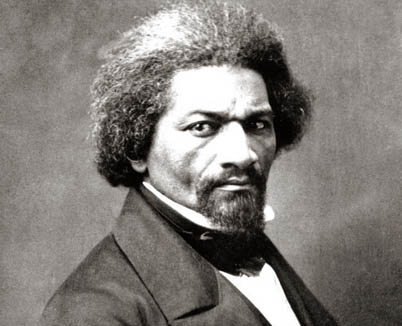
Narrative of the Life of Frederick Douglass, an American Slave- A Necessary Evil

http://www.bajanreporter.com/2009/12/breaking-news-barbadian-students-lashed-for-tardiness
        One need not progress very far in the reading of The Narrative of Fredrick Douglass, an American Slave before realizing the extent to which portrayals of violence against slaves by their masters, often extremely graphic and highly vivid, play a role in the description of Douglass' life. Clearly, we know now that violence through a variety of punishments was the norm on the variety of American plantations during the period when slavery was existent. Something tells me personally that most individuals at the time realized this fact as well, be they slave owners or not (the majority of even Southerners did not actually own slaves, and of those that did, less than one percent actually had any sizable number of them) (http://civilwarcauses.org/stat.htm). However, the question must be raised, that did Douglass truly need as graphic the descriptions as he choose to include in the text in order to further his cause, make his point clear, and explain what life was truly like as a slave? As an educated African-American, he already creates much skepticism over that which he has to say. After all, during a time when so many of the African-American complexions are enslaved, what made this one individual somehow different and uniquely qualified to weigh in on the issue with "educated" Americans? 
Yet above all, beyond the abolitionist motivations and such, it seems that Douglass included these graphic descriptions because that was the way in which he personally recalled these events happening at the time. This was the unadulterated impression such violence had left upon him. This was the manner of treatment in which his being had been exposed to from a very early age of his life. Additionally, many of the worst things he had seen had been as a young boy, or certainty at an age prior to adulthood. Thus, a child at this age is not likely to see fit to internalize something as horrific as seeing his fellow slaves bleed at the behest of masters as anything less than face value. Every sensory input he was exposed to during these events would be well affected. 
            One of the best examples of this comes at the end of the first chapter of the text, where Douglass describes the beating of a slave named "Aunt Hester." Having not seen such a display of violence before in his young life, the act caused him to be "so terrified and horror stricken at the sight, that [he] hid in a closet and dared not venture out till long after the bloody transaction was over" (Douglas, chapter 1). What stands out to the reader about this section more than anything is not so much that the then young Douglass was exposed to such horrific violence at a young age, but that the slave in question was of apparent beauty exceeding most all women in the region, both white and black, and that she had been caught with another master's slave. Perhaps Douglass is alluding to the idea that the master meant to have her to himself, and having another slave lie with her, made her master appear poorly. Either way, the graphic of the representation of this scene in particular is absolutely necessary for the tone of the narrative overall. 

The White Man


https://blogger.googleusercontent.com/img/b/R29vZ2xl/AVvXsEgdd6yD7fykctJo6vhxhLrcHuyMNMz4BXY3NeBAR4s0H-7Su3770Giq7XAyff7vzli7ZCpvS-1ATd1mJPM5kOlWjizphw3gXXPDVfKhWZo1li_1YCG9ZAOhRWUAFH-HXJ_l2FrOhv8GUks/s320/-chinese-immigrant-children.jpg

The short story "In the Land of the Free" by Sui sin Far there was an uncomfortable feeling presented about the white man. When I first looked at the the title of the short story, I assumed it would be a story that was happy, uplifting, and would make me proud to be in the "land of the free." However, I shortly found out that that was not the case at all. The moment that it sunk into my gut that this was going to be a heartbreaking story was when the officers said the Hom Hing and Lae Choo, "we cannot allow the boy to go ashore. There is nothing in the papers that you have shown us- your wife's paper and your own- having any bearing upon this child." And yes, that is the point that I realized... these people just lost the freedom of having a child.
Once they lost their child, you can feel the agony that Lae Choo is in. "Ah, how could I close my eyes with my arms empty of the little body that filled them every night." And as Lae Choo speaks about her child who had been taken for her, you can see that nothing can compare to the love of mother to her child. And she continues, "You do not know-man- what it is to miss the feel of the little fingers and the little toes and the soft round limbs of your little one." But still Hom Hing is optimistic that there "little one" will return to them very soon. Except, months past, and their boy still had not been brought home to them.
During the story there was mention of how white women were caring for the young boy and how he was now apparently happy and contented. That part of the story was the first mention of someone being "white" but it wasn't the last. I realized when the story talked about the white women that there would be more reference to white people. And the way white people were talked about almost made it unsettling. The next mention of a "white" person was when a man came to help Hom Hing and Lae Choo, but requested that they him five-hundred dollars. Lae Choo realizes that the man just wants money and says to him, "You not one hundred man good; you just common white man." This quote was when I realized that they were not in the land of the free; to me, it seemed like they were just in the land that was controlled by the white man.
The ending was still unclear to me at this point. There was so much emotional build up that the story could go either way, and I was almost 100% sure that it would have a happy ending. And then I read the last two lines, "But the little One shrunk form her and tried to hide himself in the folds of the white woman's skirt. 'Go'way, Go'way!' he bade his mother." How awful, how heartbreaking. It says that he hid in the white woman's skirt.. It ends with an unsettling feeling about the "white" man.

Thursday, February 12, 2015

Captain Delano's role in Benito Cereno

    Benito Cereno offers many themes that might be explored, however the the prolonged build up to the eventual conflict between slave and sailor, whereby Captain Delano repeatedly ignores signs pointing to the amiss is arguably the work's best attributes. Melville presents Delano as a rather oblivious individual during this entire lead up, and beyond that, also as one whom when presented with clear evidence that conditions on the slave ship were not what they seemed, inwardly questioned rather than actually confronting this body of evidence.
    
     The reader first picks up on the seemingly complete absence of Spaniards aboard the slaver, in relation to the shear number of it's cargo. The disease explanation of Cereno immediately should not have jived with conditions on the ship, as the likelihood that all commanding officers, other than Cereno himself, should have perished seems far fetched. While the narrator eventually reveals that there are actually several Spaniards left alive, their hidden presence, should have immediately been cause for alarm.
    
     Also, the first contact Delano has with the slaver is met with highly exaggerated wailing among those on board. Melville paints this as almost orchestrated in nature, and of such vigor that Delano is at first overcome with the scene before him. This would seem to be bizarre, at the amount of energy expended by those purportedly malnourished, as well as the level of synchronization that it entailed. This should have also been an early sign to Delano that he might have been entering a well staged scene for his benefit.

     The role of Babo in the eyes of Delano is a major contributing factor as to why the whaler's captain failed to realize that which was playing out around him. Delano openly admits to a "soft spot" for "Africans" and seems to have been completely charmed by his mannerisms, "devotion" to his maser, and ability to service him in a gentle and engaged manner. He thinks little of the fact that this type of devotion would be entirely uncharacteristic for a slave, especially one for whom master has little physical power over. Cereno is outwardly weak, and requires the constant aid of his slave, there seems little to reason that the slave should easily replace the master in this relationship.

     Nowhere is this more clear than in the shaving scene, where the very balance between life and death, slave and master, leader and follower is on display. Here Babo holds the ability to end Cereno's life on his very skin, thus establishing how utterly powerless the captain truly is. Delano is so distracted with Babo's mannerisms and attractions to bright colors that he fails to see the actual importance of the slave's performance for his benefit. The mention that Babo had never cut his master before, and now, in the presence of Delano he chooses to do so holds a special significance. It took a specially oblivious character to allow Melville to fully draw out his description of the conditions aboard the slaver, and in crafting Delano he had achieved his aim.


The Lion Writes History


I was particularly fond of the way Wendell Phillips used the reference of "The Man and the Lion" in the letter to Frederick Douglass in the beginning of the Narrative of the Life of "Frederick Douglass, an American Slave." It is so inspiring and interesting that this book was written so early in American history, because the voice of the slaves was not a common interest in many people in our country. 

This book was written to have Douglass become a promoter of anti-slavery to aid the abolitionist and to make the "white" reader question their prejudice against slavery. 
In interesting point that was made in the Preface of the story was that the mental deterioration of the African race is a result of slavery, not a preexisting quality of the slave population. Phillip explains that if this circumstance happened to any other race, it too would have the same effect. 

Because the slave owner and other white people believe that the slaves lack intellect, I wanted to relate that to the songs sung by the slaves. Douglass attempts to make his white readers see the slaves as humans with both reason and emotion. He describes this through the way the slaves use their 
songs.

Page 57 gave me intense feelings and made me feel a mix of sadness and happiness. There was one part where the slaves sang, "I am going away to the Great House Farm! O, yea! O, yea!" (Douglass 57). These people were so grateful for something so little, and they felt so privileged to be able to do this. 

To me, the way the slaves sing the song to depict their emotions is extremely powerful and inspiring. Thought they may not always be cheerful (in fact, Douglass mentions that the songs are rarely happy), they seem to keep the slaves full of faith and uplift their spirits. That shows intellect. And that's not something that the slave owners taught them. It shows that they are humans, with real intellect and real emotions. 


Wednesday, February 11, 2015

"I was raised among slaves, and have also owned them, and am well aware that the slaves live better and fare better in many respects than the free blacks." - A. C. C. Thompson [Former Slaveholder]

After reading this quote from Mr. Thompson, the former slaveholder, how does this make you feel? Speaking for myself, and possibly many others, I feel outraged, angered, and disgraced. Mr. Thompson publicly dismisses Frederic Douglass's narrative as a lie. He publicly writes Douglass stating that Douglass made up everything in his narrative. The troubling fact of this quote is that Mr. Thompson actually believes that free blacks are treated better than slaves. Yet, this does not surprise me for ignorance is a safe haven for many people. 

"Humility and knowledge in poor clothes excel pride and ignorance in costly attire." - William Penn

William Penn's quote accurately represents everything Douglass wants us to understand. Through out the entire narrative of Douglass, Douglass wants us, the readers, to become aware of the circumstances that so many slaves lived in. In the case of William Penn's quote, Douglass represents humility and knowledge while Thompson, and other slave holders, represent ignorance. Douglass experienced this ignorance throughout his entire life. 

I would like to discuss the topic of ignorance further. I think that ignorance is something that every single person can relate to. Whether one wants to admit it or not, we are all guilty of ignorance on a daily basis. Although this assumption seems slightly pessimistic, it carries a lot of truth with in it. The United States, as shown in the narrative of Douglass, was extremely oblivious to the concept of slavery. For quite some time, slaves were referred to as property rather than human beings. How can that be? Did slave owners and supporters simply not know any different?

It is shocking to read actual accounts of the atrocious acts of so many American's as demonstrated with in the narrative of Douglass. However, aside from all of the negatives that occurred because of ignorance, it is satisfying to see one man define all of it and emerge successful. I think Douglass truly wants us to realize the what ignorance can do to someone, or in this case, an entire race. Through his expression and actual account of his life, we are able to see what education, determination, and perseverance can achieve. It is important that we try to acknowledge what we are doing to avoid ignorance at all costs. Admittedly, it is virtually impossible to complete this task. However, small numbers eventually add up to larger numbers. Thus, creating a significant difference in the world. 

I want to leave you with one last thought. Has the United States been guilty of ignorance before? (Hint Below)
https://encrypted-tbn0.gstatic.com/images?q=tbn:ANd9GcRA_ccmTHufAk7Wl_7GTe_WzHejjnRk1dg4pplRhCE1wZ54NVhq

Monday, February 9, 2015

Perfection is a Birthmark


Perfection is a Birthmark

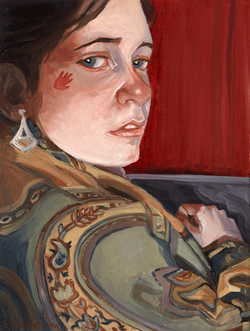
            I think that in Aylmer’s case, it wasn’t the actual birthmark that affected him but what it represented. It reminds him of the imperfections of nature, which is something he has dedicated his entire life to eliminating. Yet, he has had very few successes. When he sees the handprint, he is reminded of his failures. The birthmark is a red hand on her cheek which can’t be hidden. Which is why he becomes so obsessed with it. It is also a reminder for Aylmer of Georgiana’s past suitors and is therefore a mark of impurity.  The fact that the mark is in the shape of a hand is also important to note because it makes Georgiana’s beauty into an object that can be touched and manipulated.

This story shows how women are often times treated as objects that shouldn’t be able to decide what they want to look like or be with. When Aylmer first confronts Georgiana about her birthmark she replies: “Then why did you take me from my mother’s side? You cannot love what shocks you” (Hawthorne, pg 85, paragraph 3). Georgiana makes it sound like it wasn’t her choice to marry him. Whether that is true or not, this illustrates how trapped Georgiana feels now that she is stuck with a man that doesn’t appreciate her natural beauty because he is not capable of accepting nature as it is.

            This story also raises the question of how far a person is willing to go to become accepted by the person they love. The story answers this question in the end with Georgiana’s death because it shows that if you blindly follow someone’s orders, you could end up becoming seriously harmed or killed. It’s like when you hear the situation of “if your friends told you to jump off a cliff, would you?” We’ve all heard this before, but how seriously do we understand it. Your immediate response hopefully is of course not. But, what if you are constantly pressured to do so or your “friends” assure you that you won’t get hurt from the jump? Or you start to be treated differently by said friends just because you won’t adhere to the expectations that people have for you? Would you still be able to say no? Georgiana was pretty much in this exact situation and was eventually battered down by Aylmer’s behavior toward her birthmark to accept his resolution to get rid of it. Georgiana was an innocent so far as the reader knows (although she may have a questionable past with her previous suitors), yet a physical tribute made Aylmer feel she was less.

            The handprint is also like a mark of abuse or aggression. The way Aylmer treats his wife creates all sorts of contradictions and makes Aylmer a hypocrite. When she goes into his laboratory uninvited, Aylmer grabs her to make her leave. “He rushed towards her and seized her arm with a grip that left the print of his fingers upon it,” (Hawthorne, pg. 95, paragraph 5). Aylmer makes almost the exact print that is on her face on her arm when not a second before he was preparing for the removal of the birthmark on her face! It becomes clear that it was never really about Georgiana and making a correction on her face. It is about Aylmer achieving perfection and him never being able to accomplish that. He is taking his frustrations out on Georgiana and she is the one who truly loses in the end. This scene also serves as a metaphor because it shows how you can try to be perfect but the decisions you make to become perfect make you less perfect. In fact, it becomes the undoing, downward spiral, flush down the toilet, etc.

            Perfection can drive a person insane for many reasons. First, its basic definition is difficult to actually understand. Especially because everyone has their own ideas of what is perfect. This makes it difficult to be perfect in everyone’s eyes. Second, becoming whatever entails being perfect is challenging. As a musician, I will practice one little piece of music for hours on end to make it perfect. I used to think that my music always had to be a certain way and then I discovered that’s not necessarily true. Making something into my own little thing of beauty helps me achieve my own form of perfection. My definition of perfection is to be the most you that you can be in the best ways. If Aylmer had realized this he may still have a wife.

Thursday, February 5, 2015

Trusting in the Narrator-Clara Wieland.


Narrator Bias in Wieland

Wieland, by its very nature, is a text for which many questions are left unanswered or, at the very least, vaguely explained to the reader. Generally, one must rely on the preponderance of the evidence in attempting to come to terms with that which the text leaves open-ended in interpretation. The line between dream and reality, voice of one’s own mind or some external entity, and even varying perspectives are often quite blurred by intention of the author. Yet above all, the reader must note that Charles Brockton Brown chose to set the entire account of Wieland in the voice of single narrator, Clara Wieland, whom arguably had one of the largest roles to play in the manner in which the story played out. It stands to reason then, that the same individual who personally suffered the loss of her brother and his entire family, as well as arguably her sanity, is not the best unbiased source in explaining how the role of an outsider affected her family. Namely, her ultimate conviction is that Carwin was responsible for the death of her brother and her personal misery.
          Throughout Clara’s testimony, she is frequently overcome with emotional outbursts and requests to stop the telling of the story. Her mental health is clearly compromised, and the telling of the very events that affected it in the first place seems highly unwise. It seems unlikely that, as she builds to a conclusion of such unhappiness for herself, she should tell the story through the lens of the way in which she actually felt while it was occurring. It would be nearly impossible to remove one’s self from that much heartbreak and portray accurately an earlier, unbiased version of herself. She begins the tale quite against the notion of telling it at all, yet, why should she continue? Clara claims “…every remnant of good was wrestled from our grasp and exterminated” (Brown 12). It does not sound as if she wanted to go to this dark place in her mind ever again.
Thus, from the very first mention of Carwin, we might only assume that the description of his actions to be not as portrayed. He might not necessarily have been an innocent party to the events that so deeply ruined the Wielands; however, the only account of him that we have is from someone who claims this individual constantly spied on her, put voices in her head, and attempted to rape her. To say that she would not have some sort of grudge or ill will against Carwin after all of the events that occurred is far-fetched. Add in the fact that his antics may have, in some way, led to her brother’s murderous ways and suicide and the trend only strengthens. This is the kind of emotion that incites one to lash out in vindictive ways, not to mention leading to a debilitating mental state of being. The reader already knows the latter is true. Would not portraying this individual in an incriminatory manor not fulfill the former?
While somewhat difficult to find a singular “smoking-gun” to the narrator’s bias against Carwin, the following line is as pointed evidence as any to that affect: “His [Carwin’s] guilt was to the point that I was indifferent…thenceforth he was nothing to me” (Brown 215). Clara finally states flat out that this is a person for whom she has complete distrust, and finds absolutely guilty for at the least her brother’s death, if not the remainder of his family. This beyond a shadow of a doubt calls in to question her portrayal of Carwin in the text, a work that was written entirely in the aftermath of the aforementioned statement.

Tuesday, February 3, 2015

The Symbol of Death


The Birthmark was a depressing and tragic story written by Nathaniel Hawthorne. Much like Hawthorne's other stories, this story uses symbolism; and in this instance, the symbol is the birthmark that is on the cheek of the main character Alymer's wife, Georgiana. 

The beginning of the story shows conflict and how the husband and wife feud over the hand shaped birthmark. Towards the middle of the story Georgiana almost seems disgusted and appalled that her husband is so affected by the slight imperfection, and so Georgiana agrees to remove the birthmark. And the end results in an easily predicted, but nonetheless tragic death.

Throughout the story, the birthmark represents numerous things. One being imperfection and the other being death. Alymer obsesses over his wife's imperfection and continually makes negative comments about her slight imperfection, and enunciates that fact that she should have a removal of this birthmark. He can't get past Georgiana's flaw and so he starts experimenting how to begin the removal. And though it is human nature to be imperfect, he reacts foolishly and tries to compete with nature to fix an imperfection that ultimately leads to death.  

The birthmark also symbolizes immortality, because no one is perfect an no one can escape from death. Alymer tries to fix the flaw of his wife but tries to dodge the one thing that is unavoidable: death. Alymer shows ignorance because it is obvious that people can never attain complete perfection, only until the moment when their death arrives. And as death does approach the spirit of perfection arises. However, people continue to strive for perfection and immortality. Since the birthmark is shaped like a small hand, another interpretation could be that it symbolizes the hand of God or even an angel. This theory may also lead to the theory that it symbolizes death, because in the end it's God's hand that takes away Georgiana. 

In conclusion, death is inevitable; perfection will never be achieved; and nothing can stop God's hand.